
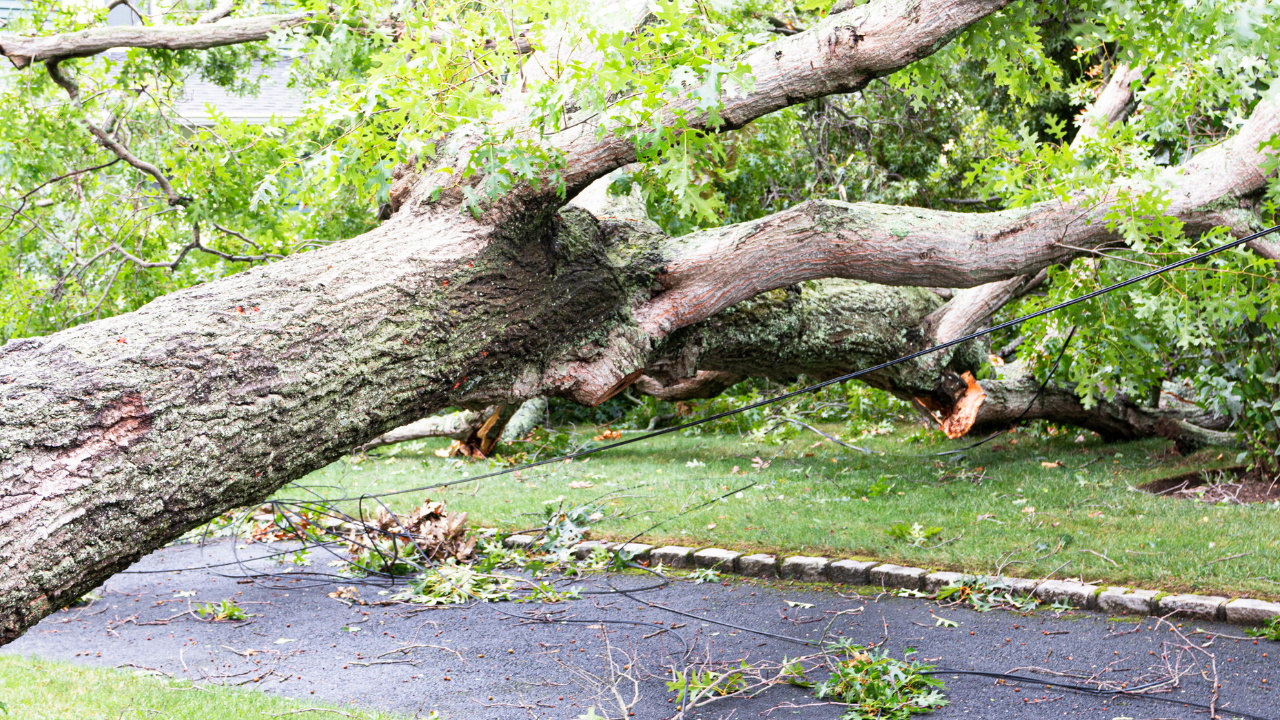
In Northern California, where unprecedented winds, extended drought, saturated soils, and wildfires are part of the seasonal rhythm, healthy trees can quickly shift from valued assets to serious hazards. Typically tree emergencies begin as slow-building issues – often overlooked – that silently compromise a tree’s structure or stability.
By recognizing early warning signs, property managers, HOA board members, and residents can prevent costly emergency removals, property damage and safety incidents. This article highlights the red flags to look for a how regular inspections can turn "emergencies" into manageable maintenance.
What is a tree emergency? A tree emergency typically refers to any situation where a tree – or part of it – poses an immediate risk to property, people, or public infrastructure. This includes fallen limbs, uprooted trees, or trees with imminent failure potential due to structural instability, disease or environmental stress.
Common triggers for emergency tree situations in Northern California include:
- high winds or storms,
- heavy rain saturating soil and weakening root anchorage,
- prolonged drought,
- insect infestations,
- fungal decay.
The good news? Most of these failures are preceded by visible symptoms.
SIGNS OF STRUCTURAL DEFECTS
When it comes to tree safety, early detection of structural defects can prevent costly damage or injury. One of the most concerning signs is a tree that begins to lean – particularly if the lean develops suddenly after a storm with high winds and rainfall. While some trees naturally grow at an angle, a new lean, especially toward structures or walkways, should prompt immediate evaluation by a certified arborist. Other warning signs include vertical cracks or splits in the trunk or major limbs. These are especially dangerous when they occur near limb attachments or at the base of the tree, where co-dominant stems (two stems growing from the same junction) can be prone to fail without warning under high winds.
Fungal growth, such as mushrooms or conks near the base of the tree or along the trunk, can be another serious indicator. These are often signs of a tree’s internal decay caused by pathogens like Ganoderma or Armillaria, which will degrade the wood’s structural integrity. Unfortunately, by the time the fungal growth is visible, significant internal damage may have already occurred. Cavities or hollow areas in trunks and limbs can also compromise a tree’s stability – particularly when they appear at the base of the tree where anchoring system (roots) is most critical and may even provide additional entry for pests.
DETECTING PEST DAMAGE AND TREE DECLINE
Sudden and unexplained dieback in the canopy can be a sign that there is pest or disease activity. When large portions of the canopy turn brown or begin thinning rapidly, it may signal a deeper issue within the root system, which often makes trees more susceptible to opportunistic insect infestations.
Among the most common culprits are bark beetles, especially in drought-stressed pines and conifer species. Signs of bark beetle activity include fine sawdust (frass) collecting at the tree’s base, small exit holes in the bark, or pitch tubes – resinous blobs that indicate the tree’s attempt to defend itself. Another indirect but important sign of internal pest activity is increased woodpecker damage. If you notice rows of small holes or active pecking along the trunk or major limbs, it may indicate wood-boring larvae beneath the bark. Woodpeckers can be an early alarm bell for beetle or borer presence, signaling internal decline before the damage becomes visually obvious.
ROOT AND SOIL RED FLAGS THAT SIGNAL INSTABILITY
While much of a tree’s health is visible above ground, some of the most serious threats begin at the roots. One major red flag is soil mounding or cracking near the tree’s base – particularly following strong winds. This lifting or splitting of the soil often indicates movement in the root plate and may precede a full uprooting event. Another hidden hazard comes from girdling roots, which encircle the trunk or constrict within the root zone. This can impair water and nutrient uptake, weaken anchorage, and increase the risk of windthrow, especially in confined planting areas. Though not always visible at the surface, girdling roots can often be confirmed through visual inspection or removal of some soil around the base of the tree.
Root rot is another common and dangerous issue, particularly in areas with compacted soil or chronic overwatering. Pathogens such as Phytophthora thrive in overly saturated conditions and can compromise a tree’s roots system from below. Visible signs of root rot may include canopy thinning, reduced growth, or even a sour or musty odor near the base of the tree. Identifying these below-ground problems early is critical, as root-related failures often occur with little warning.
WEATHER-RELATED RISK FACTORS IN NORTHERN CALIFORNIA
Even healthy trees can become hazardous when exposed to extreme environmental stress, and in Northern California, seasonal weather events often play a pivotal role in tree failures. Winter storms, for instance, can saturate the soil, significantly reducing root anchorage – especially for trees in turfgrass. This is particularly risky for large heavy trees which can be more prone to uprooting under these conditions. On the opposite end of the spectrum, drought conditions dry out and weaken tree tissues, making them more brittle and susceptible to limb breakage under high wind loads. Fire is another silent contributor to delayed tree failure. Even when a tree appears to have survived wildfire or a nearby heat event, internal wood may be structurally compromised – posing a risk that may not become evident until months later. These weather-driven factors often transform otherwise manageable trees into emergencies, underscoring the importance of post-storm inspections and proactive management.
PREVENTATIVE STRATEGIES: FROM WALKS TO REPORTS
Emergency tree failures are often preventable with proactive care and structured monitoring. Below is a list of the following steps that you should be acquainted with:
- Tree risk assessments conducted by a TRAQ certified arborist
- Routine community tree walks
- Management plans that include pruning
- Documentation
Of the most effective strategies is scheduling routine tree risk assessments or inspections. Ideally conducted every one to three years – depending on a property’s risk level – these evaluations should be performed by a TRAQ certified arborist. Assessments consider three primary factors: the likelihood of tree failure, the likelihood of a target (person, object or structure) being impacted, and the potential consequences of that impact.
Another valuable tool is a seasonal community tree walk. This involves walking the property with your arborist and landscape team/board to observe changes in tree condition, structure, and site use. It’s also a good time to flag species that may be prone to higher failure rates in urban landscaping like top-heavy ficus planted in confined areas.
Pruning and structural corrections help mitigate risk before it can escalate. Techniques may include reducing weight on overextended or heavy limbs throughout strategic structural pruning and installing cable or bracing mechanisms to preserve structurally compromised but high-value trees.
Ongoing documentation is equally important. Keep a record of all inspections, photographs of any developing issues, and a mapped inventory. Pay particular attention to those located near high-use areas like playgrounds, sidewalks or driveways as they warrant more frequent monitoring.
KNOW THE SIGNS, REDUCE THE SURPRISE
Emergency tree failures can seem sudden; but they often follow a long period of visible decline. For communities exposed to coastal wind, fault lines or drought adapting plantings, proactive monitoring is the best defense.
By learning to recognize key symptoms like leaning trunks, canopy dieback, soil mounding, fungal growth, bark damage and root issues; property managers and board members have a better chance of avoiding surprise emergencies as well as taking budget conscious action before the risks escalate.
When in doubt, consult your arborist – a trained eye and routine inspections can mean the difference between a controlled pruning cycle and an unexpected call to emergency services at 3 a.m.
If you suspect an emergency:
- Don’t attempt to address it yourself. Even broken limbs can be dangerous.
- Isolate the area with cones or caution tape if there’s an immediate risk.
- Contact a certified arborist immediately.