
Blog
Stay up to date with all the latest community association industry news. Subscribe to this blog and receive notifications of new posts by email here
2025 Legislative Update

By Melissa Bauman Ward, Esq., CCAL
This article first appeared in our Communicator Magazine, Winter 2026 Issue.
In 2025, despite vigorous advocacy, we did not get any of our proposed legislation sponsored. Perhaps it wasn’t our day, week, month, or even our year. We did have some legislative successes in terms of educating legislators with regard to our priorities for our HOA communities, as well as defeating some particularly bad bills and encouraging amendment of several other bills so that they were less damaging to our community stakeholders.
2025 brought us a mid-year surprise – and not a good one – in the form of AB 130, the fine cap bill, but fortunately, the rest of the year was relatively mild from a legislative standpoint. In addition to limiting fines, bills were enacted which clarified disclosures to prospective purchasers regarding balcony repair projects (SB 410), dealt with EVCS insurance (SB 770), changed requirements for JADUs (AB 1154), protected owners whose homes...
Cybercrime in the Cul-de-Sac: What Your HOA Needs to Know

By Kevin Holloway
When community members think of emergencies, they typically picture a natural disaster, inclement weather, or a structural failure. Yet, in today’s digital world, there’s another growing threat that often goes unnoticed: cybercrime. While this threat is much quieter than the physical disasters we may encounter, this emergency is just as dangerous and growing fast!
Throughout the years, cybercrime has often been considered a problem for big businesses, but the reality is that more and more community associations are finding themselves facing this crisis. Why? Homeowners’ associations manage highly sensitive resident information, vendor accounts, and large reserve funds. That’s exactly the kind of data cybercriminals are after! And, the repercussions of a successful attack can be catastrophic! It can lead to an erosion of trust from residents, legal ramifications, operational disruptions, and significant financial losses.
Knowing how and why these attacks happen is t...
Sewer Backups, Roof Leaks, and Pipe Breaks: How to Respond, and Who is Responsible for Repairs?

This article first appeared in the Communicator, Fall 2025 Edition. To view click here.
When catastrophe strikes in the form of sewer backups, roof leaks, and pipe breaks, it is often unclear what to do. Then, once the initial emergency is handled, the larger question of who is responsible to pay for the repairs must be addressed.
SEWER BACKUPS
Worse than a simple pipe leak, a sewer backup can become a hazmat situation. The initial response to such an emergency is: (1) immediately fix the leak (or clog), and (2) notify insurance of the loss. As part of the initial repair, be sure to have the plumber or repair person document what is causing the backup and, most importantly, where the blockage is located. Photos and drawings of locations are key because responsibility for repair of sewer backups is typically determined by location. The board has a fiduciary obligation to investigate the cause of the damage, so it is essential to engage a plumbe...
No Deferred Maintenance, Roof Replacement Planning Begins Now
By Donna Vingo
This article first appeared in the Communicator, Fall 2025 Edition. To view click here.
There is an ongoing information and insurance crisis in California. Homeowners’ associations are having their insurance premiums increased, sometimes drastically, or their insurance is cancelled. Without association insurance, a would-be homebuyer new to the association cannot obtain a mortgage for a unit within the HOA, thus limiting his or her ability to purchase at this association.
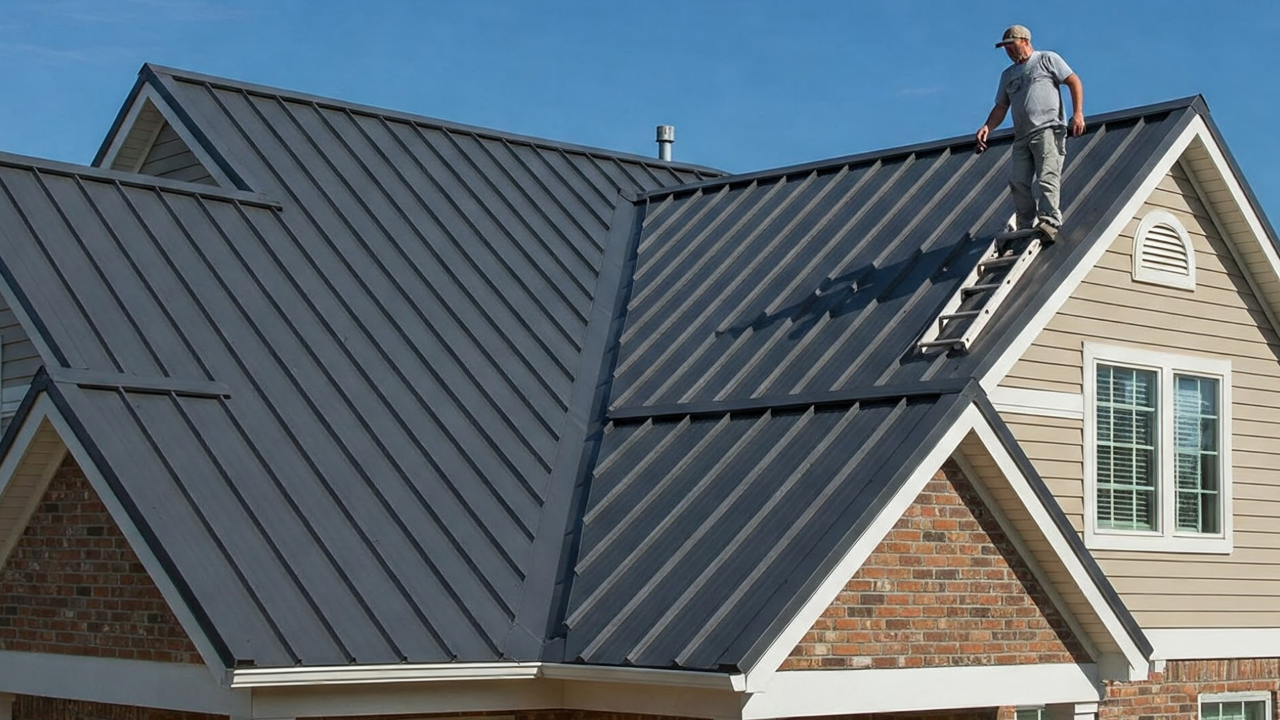
The largest number of insurance claims are due to water intrusion, with the roof being the main area of entry. Prior to a new policy being accepted and bound, insurance underwriters now require five to 10 years of maintenance records and no deferred maintenance/capital projects.
HOA roof maintenance and roof replacement, especially on an emergency basis, is one of the costliest decisions an HOA board makes. The lack of roofing information is one of the main reasons why boards don’t make the decisio...
Fine Lines: Navigating the New Law Regarding Monetary Penalties

By Amy Tinetti, Esq. & Matt Meadors, CMCA, AMS, PCAM
This article first appeared in the Communicator, Fall 2025 Edition. To view click here.
On July 1, 2025, the latest bad law to impact community associations in California was thrust upon us. Assembly Bill (AB) 130, which modified Civil Code sections 5850 and 5855, is arguably one of the most negatively impactful law changes this industry has experienced in decades. It creates some impossible challenges for community associations and leaves associations, their boards of directors, and those who work with associations with more questions than answers.
Even the enactment of AB 130 was unique because the bill did not go through the normal legislative process. CAI’s California Legislative Action Committee ("CLAC") was actively working with Senator Wahab (D-Senate District 10), who initially introduced the language in a standalone bill. However, the language amending Section 5850 and 5855 was added to AB 130 (a massive bill adopted as ...
The New Math of Reserve Studies: Tariffs + Inflation = Headache

By Robert W. Browning, PCAM, RS
For years, tariffs were a topic mostly confined to college classrooms and economic policy debates. But, as recent headlines have shown, tariffs have stepped firmly into the mainstream – and with them, new and unexpected implications are emerging across various sectors, including reserve studies.
If our office is any indication, in recent months, reserve specialists are fielding an increasing number of questions: Are tariffs impacting reserve studies? If so, how should associations respond? This article explores what tariffs are, how they might influence reserve funding plans, and what tools associations can use to mitigate their effects.
What Is a tariff? A tariff is defined by Random House Webster’s Dictionary (1996) as “a schedule of duties imposed by a government on imports or exports.” In practical terms, tariffs are taxes placed on goods entering (or leaving) a country, designed to influence trade dynamics, support domestic industries, or a...
From California to Florida ... HOA Coast to Coast

By Jacqueline Vanacek
This article first appeared in The Communicator Magazine, Spring 2025.
When I moved from the San Francisco Bay Area to the Gulf Coast of Florida, I thought I was done being an HOA board president. Not so! Now I have one HOA foot on each coast.
It is fascinating to see homeowner associations end to end, from a builder board in Florida to an owner board in California. And boy are those board objectives different. In 2024, I attended CAI West Florida Chapter’s “Home On The Range” to learn about Florida’s HOA best practices. As a California board director living in a Florida HOA, I was looking for common ground.
WHERE DID HOAS COME FROM?
California has the largest number of homeowner associations in the country, with approximately 80% of multi-family residences in HOAs. Homeowner associations (HOAs), or common interest developments (CIDs), first appeared in the 1960s when high density housing exploded. Cash-strapped municipalities looked to “associations” to fund...
Definition Of Wildfire (And Why We Need It)

By Kimberly Lilley, CIRMS, CMCA
This article first appeared in The Communicator Magazine, Spring 2025.
Most of us have been impacted by the insurance crisis in California, and if we haven’t been impacted yet, we will be. California has billions of dollars of property that needs insurance, and as losses piled up between 2017 and 2022, carriers in CA tightened their underwriting criteria, limited the amount of property they would insure, or left the state entirely in order to stay solvent. This constriction in the insurance marketplace left many without affordable or adequate insurance, and too often, no insurance options at all.
In this vacuum, carriers are being creative in finding ways to write insurance in CA, while reducing their risk enough for it to be reasonable for them to do so. One way of managing risk is to spread it out over multiple carriers, so each only takes a small part of the risk, ensuring that none of them hold the lion’s share of the losses if one should occur.
...Financial Pitfalls Following Developer Transition

By Maria C. Kao & Matt Meadors Note: This article first appeared in the Summer 2024 Edition of The Communicator Magazine.
EVERY DEVELOPMENT GOES through a transition where the original developers hand over the management and operations to the homeowners. Such a transition will include the finances of the association. Here, we focus on an association’s legal obligations, but also offer real-life advice from a professional manager experienced in turning over a community.
The finances should not be overlooked during the transition phase, and it is of utmost importance to make sure the basics are set up correctly. They should include assessment calculations, reserve studies, a thorough investigation into the operating budget and many, more discreet issues. Let’s synthesize the legal obligation information together with operational know-how for those interested in setting up the future of financial stability for a transitioning project.
OPERATING
Pursuant to the Department of Real Esta...
I Don’t Need a Budget Oh Yes You Do!

By Ed Morrissey Note: This article first appeared in the Summer 2024 Edition of The Communicator Magazine.
HOW IMPORTANT IS a budget in operating a business? (And yes, HOAs are businesses. They are non-profit corporations licensed in the state of California.) The importance of a working budget and its implementation can be measured by the health and happiness of the homeowner’s association.
A strong HOA community has underpinning practices that create an environment of neutrality and harmony when operated correctly. This promotes stability, which supports social equality. In order to achieve this, financial stability is a necessity. In other words, no monetary (assessment) surprises. Surprises destabilize HOA residences’ finances, particularly in lower income households, resulting in community pushback and the postponement of needed work. This scenario is the start of a downward spiraling trend that begins to envelop all aspects of HOA community life.
A budget is a wonderful thing ...